

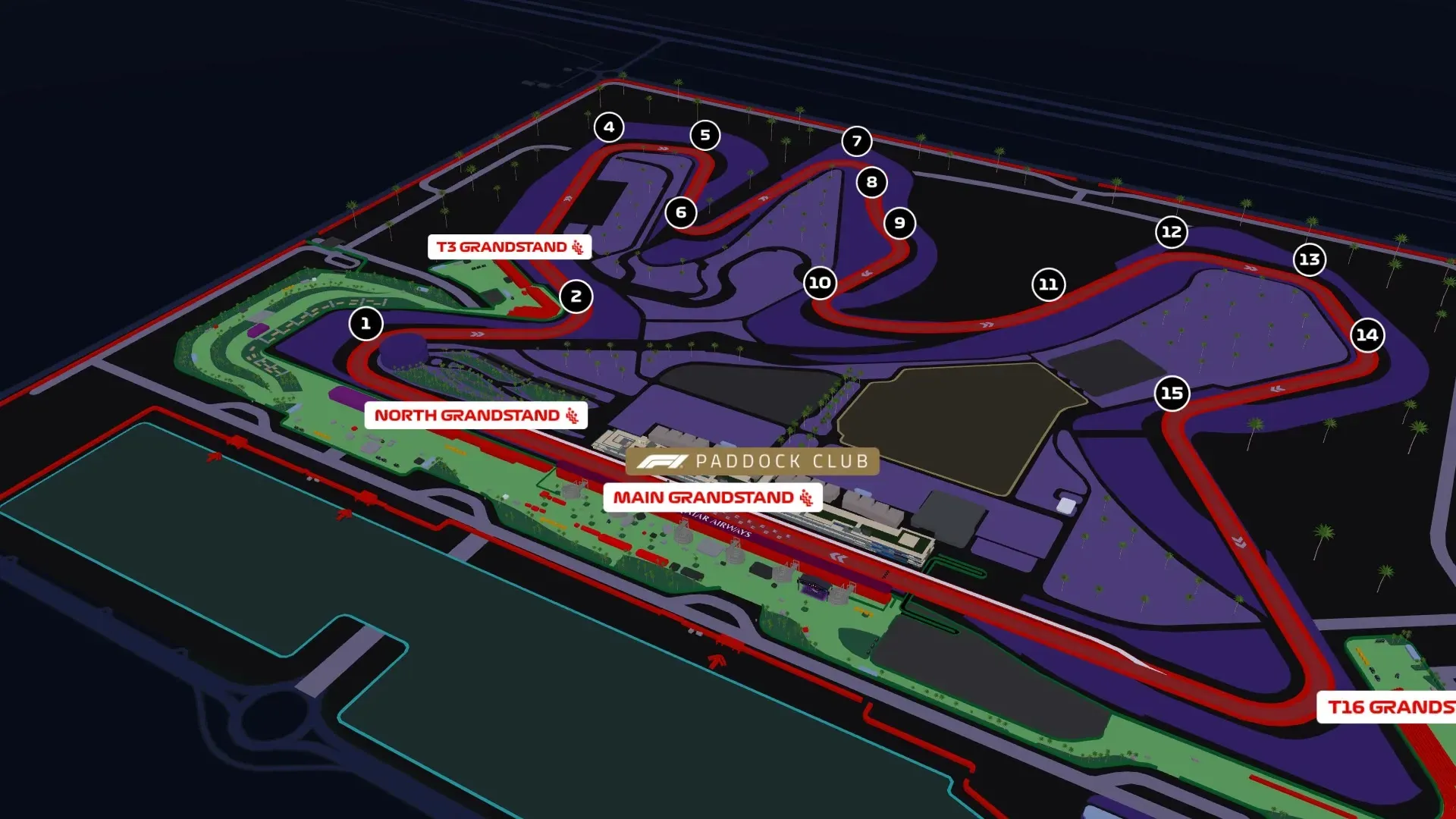
This month we have maps live at three races: the Qatar Grand Prix at Lusail, the Las Vegas Grand Prix, and the Adelaide Grand Final. They are two very different types of venue. Qatar is a permanent circuit that changes completely for Formula 1. Vegas and Adelaide are big takeovers of the city itself.
The map has to suit each one. Here is what the three have taught us.
Qatar: a permanent track, transformed
The circuit is there all year. For F1, it becomes something else entirely. New grandstands, hospitality, fan zones and routes all go up on top of the existing layout.
Last month’s map doesn’t cover race week.
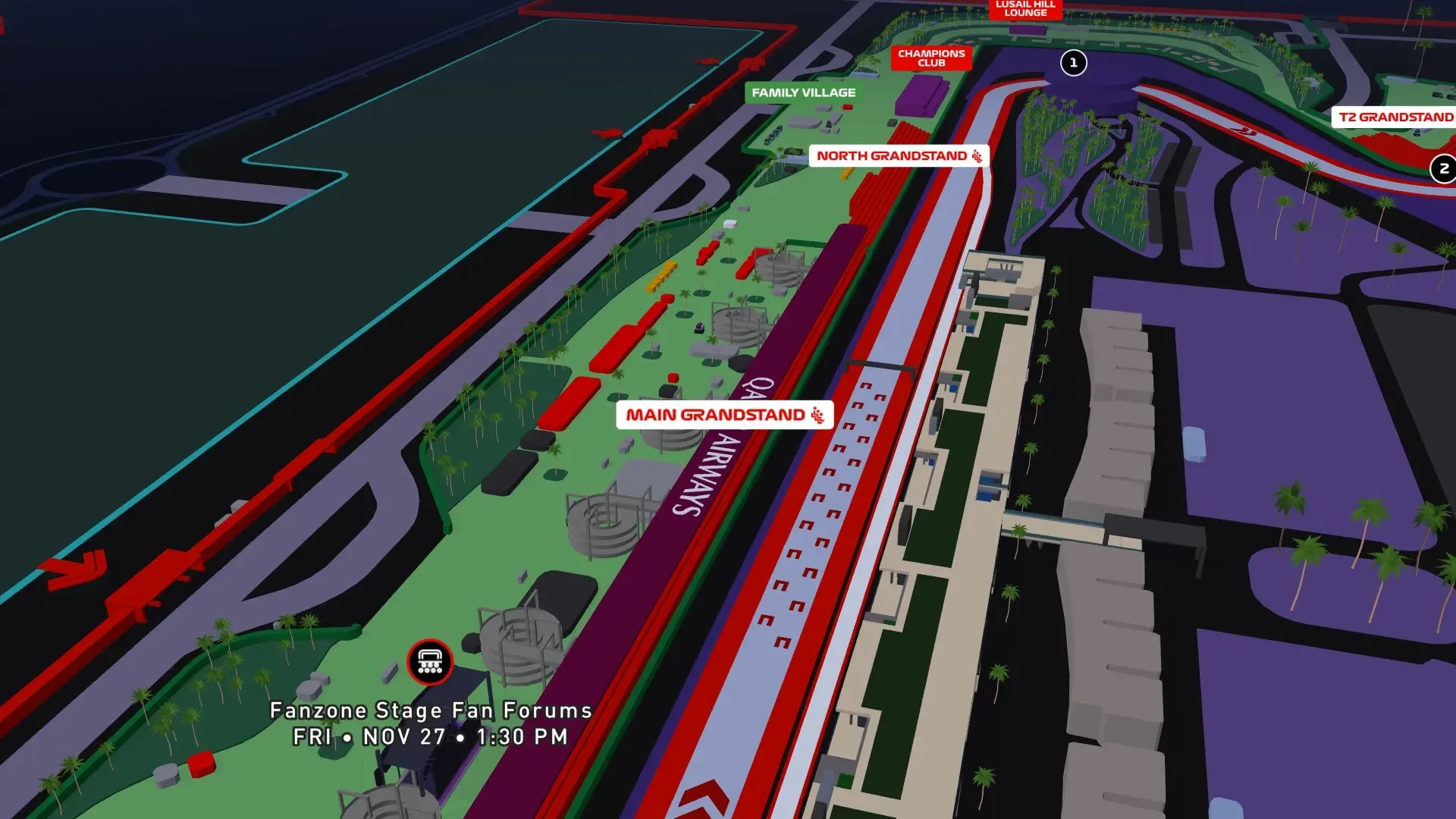
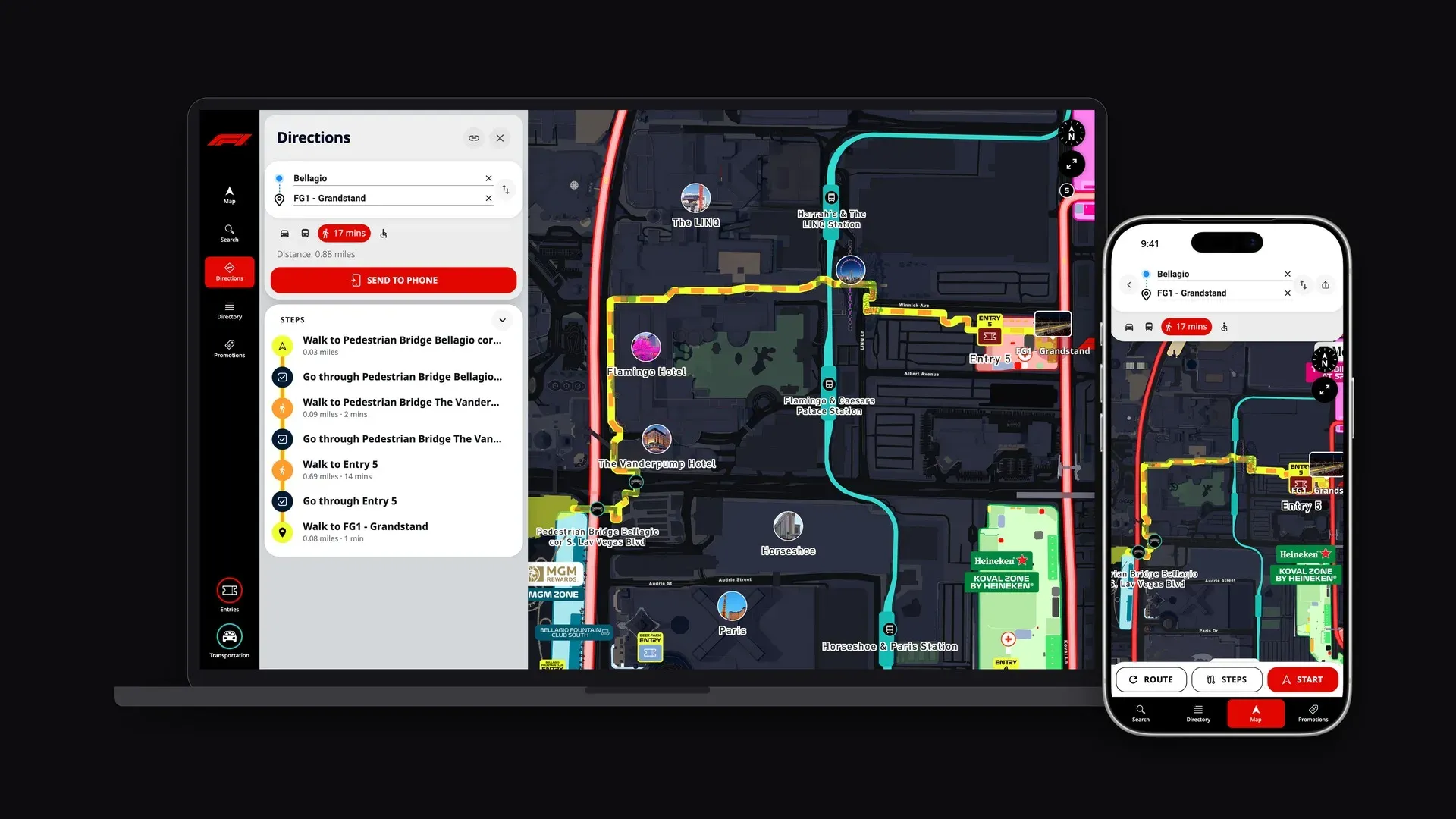
Vegas: the biggest city takeover of them all
The track runs through a working city. Fans move between hotels, casinos, gates and grandstands, and plenty of them are there for the first time.
The map has to link the race to everything around it.
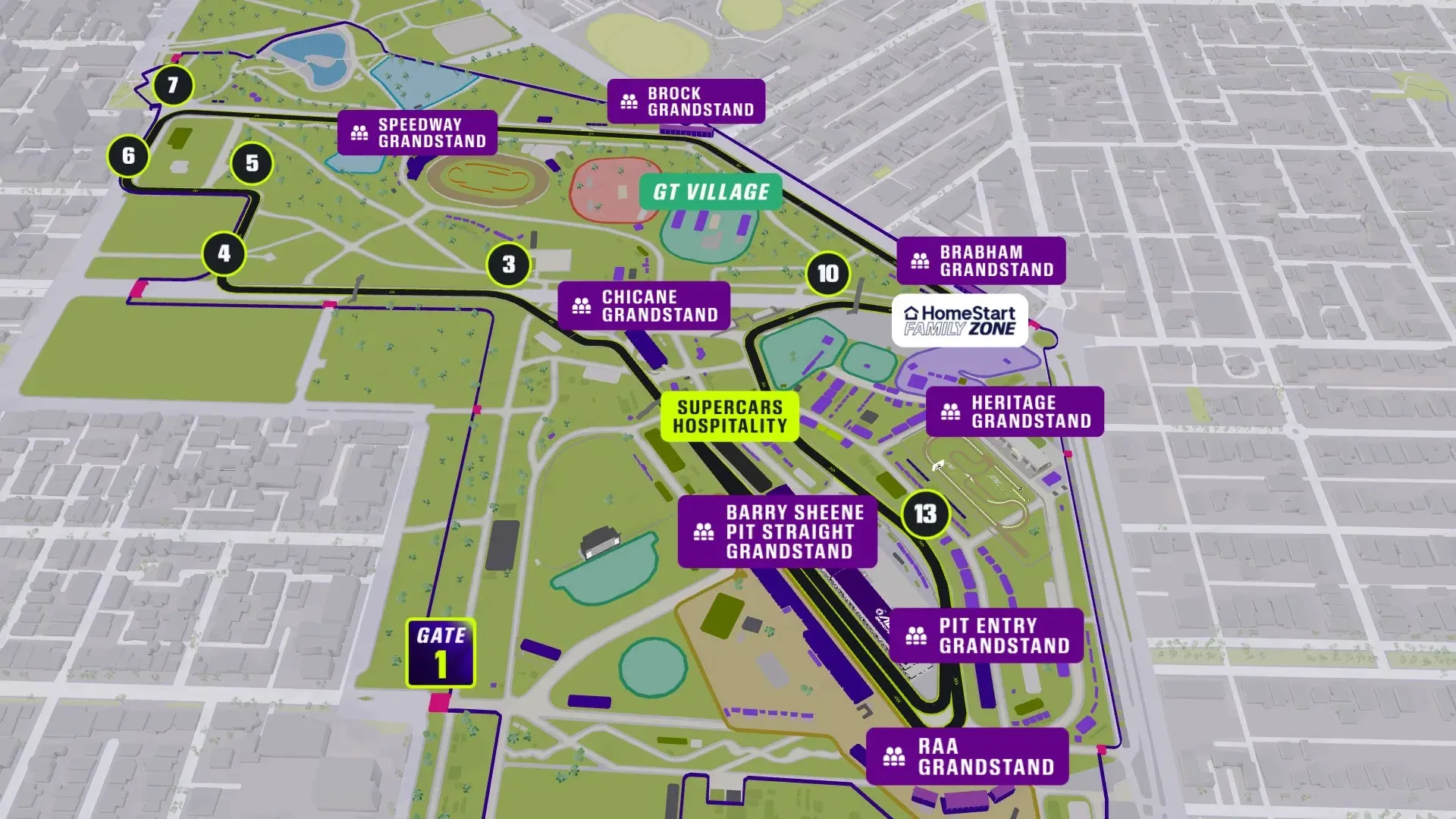
Adelaide: parklands become a racetrack
The city gives up its park for a week of racing, then gets it back. The build happens every year, and it never quite matches the last one.
Most of a race is temporary
Grandstands, bars, restrooms, gates, activations. Even at a permanent circuit, a large part of the footprint is up for one week.
Static maps go stale before the gates open.
The race can’t be the only action
Fans now expect a full festival. Headline concerts and big-name artists. Roving performers. As much off-track entertainment as you can fit in.
If people can’t find it, they miss it. So do the sponsors.
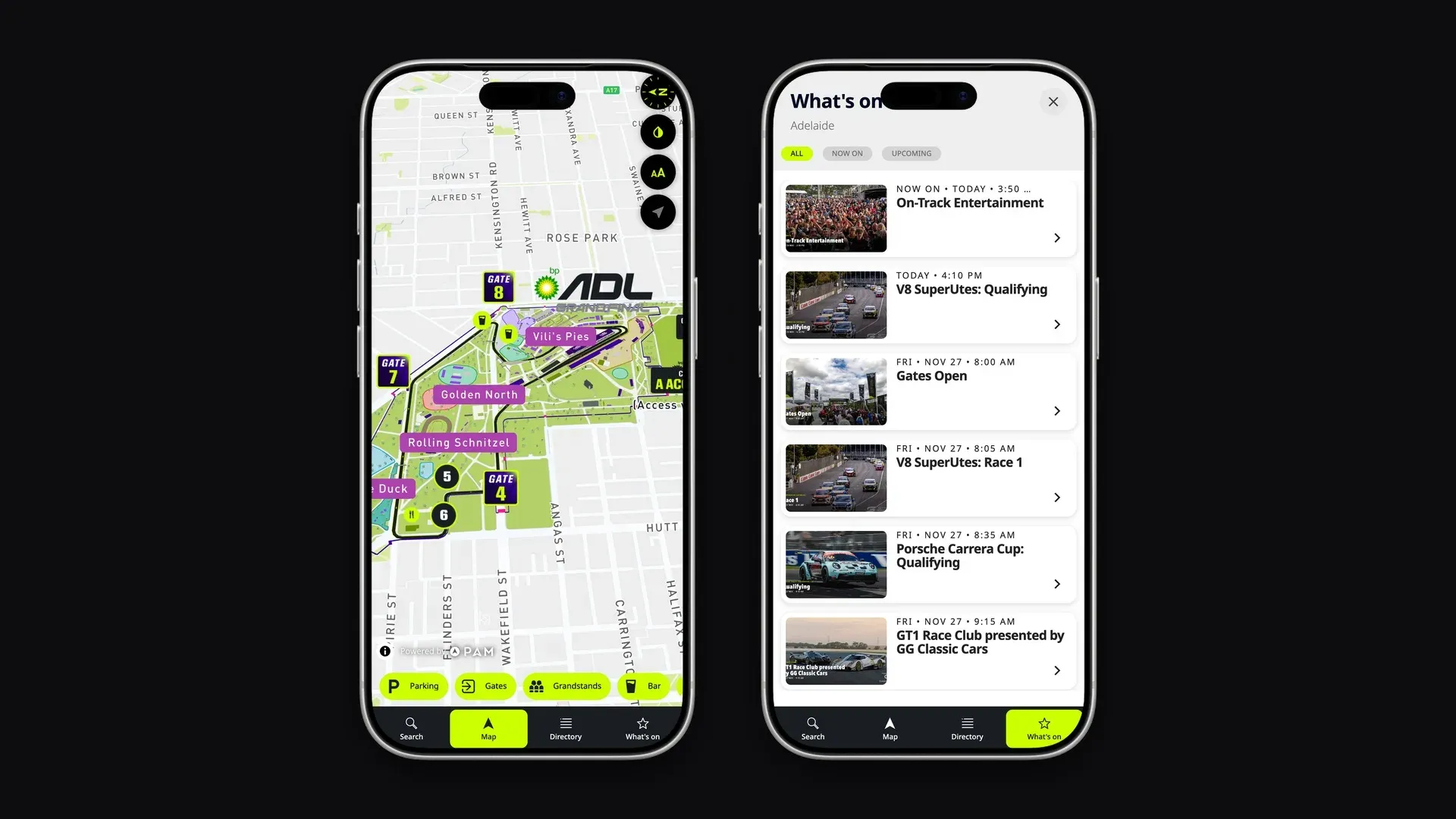
The map changes during the weekend
Gates close. Routes move. Sessions run late and set times shift.
You need a live map you can update in minutes.
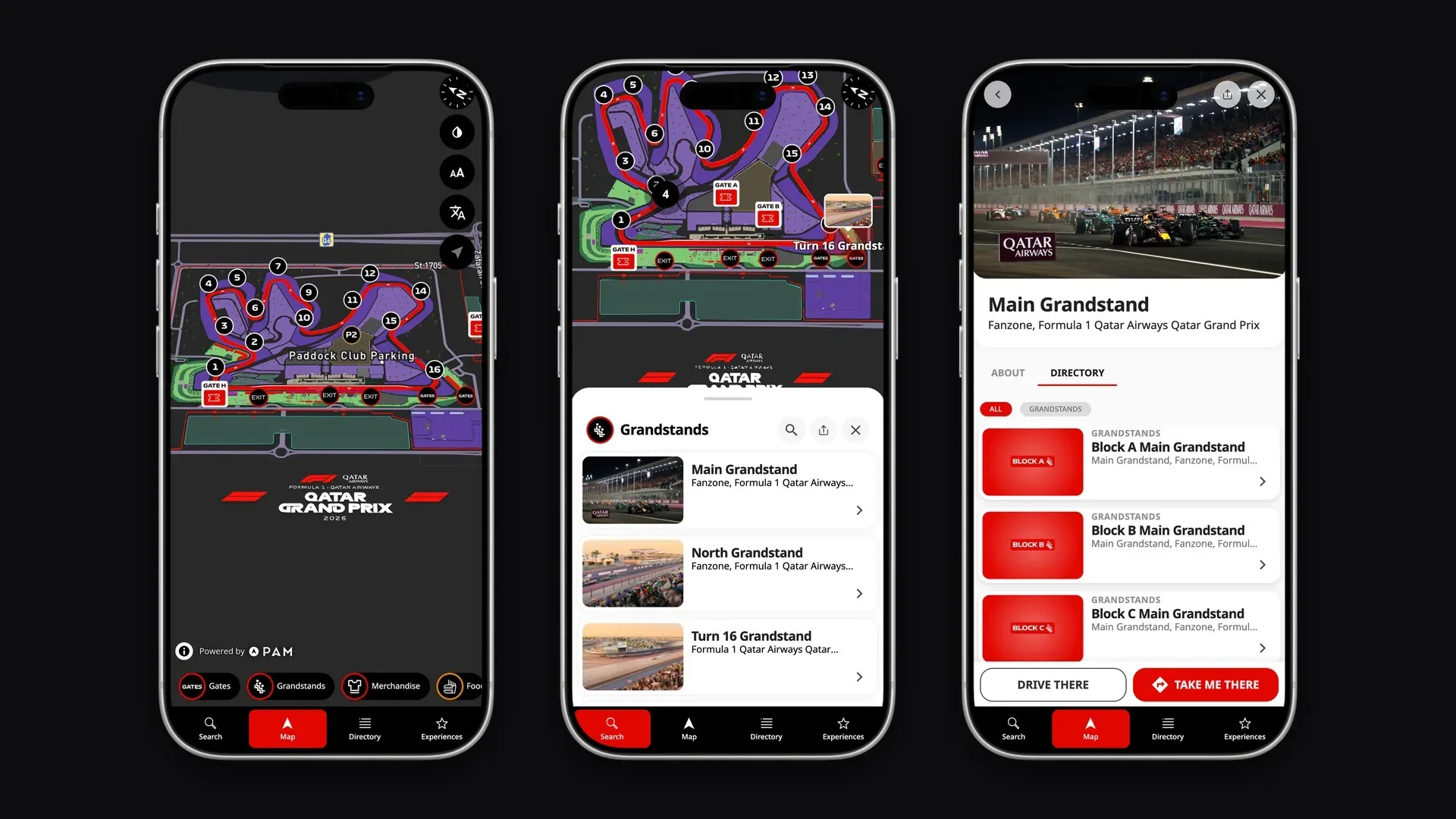
Getting in and out is the real test
Arrival and exit are where frustration builds. Clear routing to gates, transport and rideshare wins the crowd.
What it comes down to
Every race weekend is a temporary city. It is built fast, lives for a few days, then disappears.
That is where smart wayfinding earns its keep.